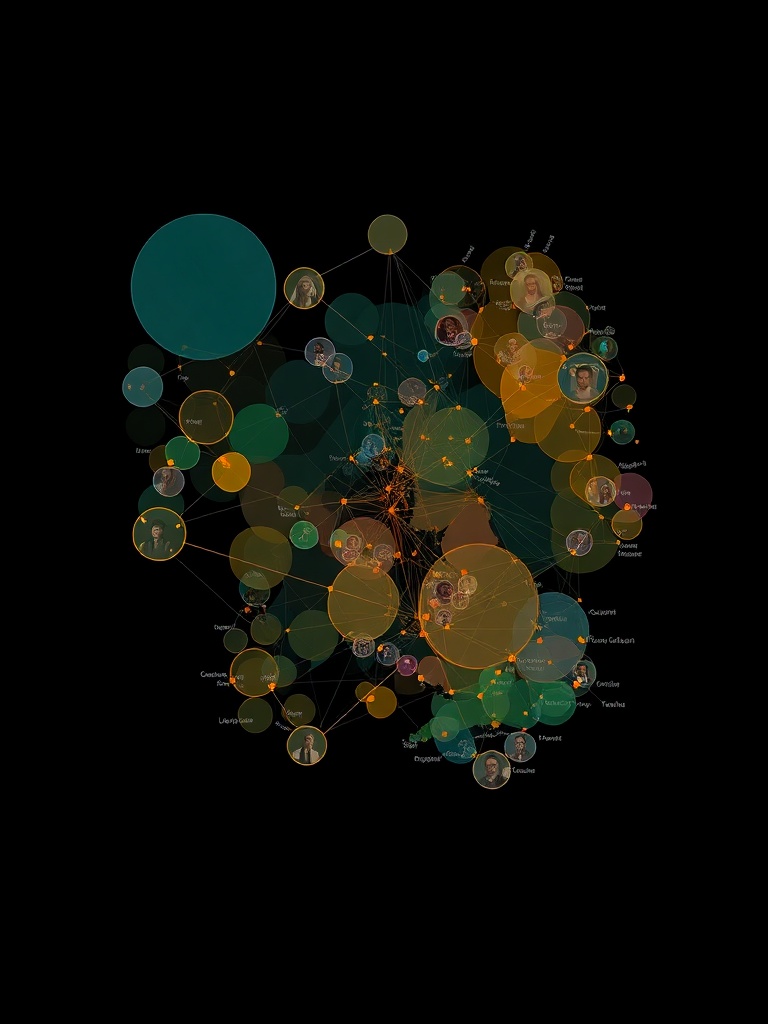
Influence mapping transforms messy networks of people, organizations, and channels into clear, actionable insight. Whether you’re planning a marketing campaign, managing a policy campaign, or preparing for crisis communications, a good influence map shows who shapes opinion, how ideas travel, and where to focus your engagement for the biggest effect.
What influence mapping is
Influence mapping is the process of identifying key actors (nodes), the relationships between them (ties), and the dynamics that give certain actors disproportionate impact. It combines quantitative data—social reach, engagement, centrality measures—with qualitative context like authority, credibility, and topic expertise.
Core steps to build a useful influence map
– Define the objective: Clarify what “influence” means for this project—amplification, persuasion, gatekeeping, or resource mobilization—and set measurable goals.
– Identify the domain: Choose the topic, channels, geographic scope, and languages to include. Include offline stakeholders such as community leaders, trade associations, and media outlets when relevant.
– Gather data: Use social listening, platform APIs, media monitoring, public records, and CRM data.
Complement digital signals with interviews and stakeholder surveys to catch nuance that metrics miss.
– Model the network: Represent actors as nodes and interactions (mentions, shares, citations, co-attendance) as edges. Use network metrics—degree, betweenness, closeness, and eigenvector centrality—to spotlight hubs, bridges, and hidden brokers.
– Score influence: Combine reach (audience size), resonance (engagement and amplification), relevance (topic alignment), and credibility (expertise, reputation) into a composite score to rank priorities.
– Visualize and segment: Create layered maps that show clusters, community boundaries, and cross-cutting connectors. Color-code by stakeholder type and annotate with suggested engagement tactics.
– Act and iterate: Prioritize outreach, partnerships, or content seeding. Monitor shifts and refresh the map as conversations evolve.
Visualization and tools
Effective visuals make complex networks intuitive: heatmaps for influence density, cluster graphs for communities, and flow diagrams for information pathways.
There are specialized tools for influence mapping—from general network-visualization platforms to social-listening suites and GIS overlays. Pick tools that let you combine multiple data sources, export for presentation, and update maps quickly.
Tactical uses
– Targeted outreach: Focus limited resources on nodes that connect to multiple underserved clusters or gatekeepers who open channels to niche audiences.
– Message routing: Tailor content for gateway actors versus amplifiers; gatekeepers often need evidence-based briefs, while amplifiers respond to timely, shareable formats.
– Risk mitigation: Identify antagonists and potential rumor pathways to plan rapid responses or neutralizing engagement.
– Partnership discovery: Spot under-recognized experts or micro-influencers with high topic relevance and loyal audiences.
Ethics and limitations
Influence mapping is powerful and must be used responsibly. Respect privacy and platform policies when collecting data.
Avoid manipulative tactics that exploit vulnerabilities or spread disinformation. Recognize that metrics can be gamed—always triangulate automated signals with human insight.
Practical tips
– Mix quantitative scores with qualitative annotations to avoid over-reliance on raw numbers.
– Map influence at multiple layers (local, national, global) and by channel type.
– Refresh maps regularly—networks shift fast during events.
– Include dissenting voices and silent majorities; influence isn’t always the loudest voice.
A well-built influence map becomes a decision-making tool—revealing where to invest time, what messages to develop, and who can help move audiences.
Start small with a focused domain, validate your findings with trusted stakeholders, and expand complexity as your program matures.